Infra-red covert and semi covert lighting solutions
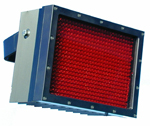
Infra-red technology is a specialty area of lighting scenes where unnatural light is either not permitted or less of a solution. The light produced from such devices is invisible to the human eye as it operates in the light spectrum beyond that which we can see.
It may be that a site is surrounded by housing and unnatural light emitted from lamps during darkness creates too much light pollution. It may also be that a covert solution to surveillance is preferred.
InCam are able to specify infra-red lighting schemes to match your precise site requirements. A number of elements are important when looking at such a solution. |
|
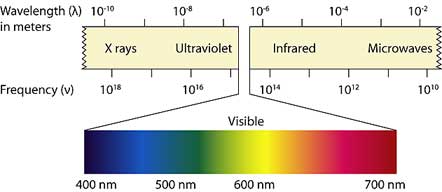
The light spectrum showing the human eye's ability to see within the range of 400-700nm. Infra-red lamps work in ranges of 850 (semi-covert) and 940nm (covert). Semi-covert lamps emit a soft red glow. We all emit infra-red light energy - allowing this technology to see our warmer bodies against cooler background objects.
The Technology
Infra-red lighting relies upon a number of elements to make a successful system:
| Infra-red elements for success |
• matching camera optics, distance and focus to the lighting solution |
| • specifying correct format, angle and distance of infra-red lamps |
• understanding the level of covertness required from the site |
|
|
The Products & Capabilities
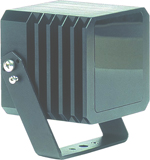
InCam use products from Derwent to create successful infra-red lighting solutions. These lamps are recognised as best-of-breed by the industry and offer excellent performance and reliability. The product set includes traditional lamp technology as well as LED-oriented lamps for sustained life when ordinary bulbs would have failed.
Whether looking for an internal infra-red solution or external - possibly including number plate recognition - Derwent's products provide excellent lighting solutions for infra-red capable cameras - such as Axis and Sony fixed-position and pan/tilt/zoom cameras.
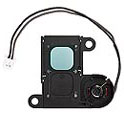
The lamps themselves feature built-in 'photosensing' switches. Thereby automatically switching the lamps on at dusk and off at dawn when light levels dictate. Infra-red capable cameras also automatically switch using a 'cut filter' - a glass filter that moves in front of the image sensor to alter the light properties. This provides full-colour daytime images and high resolution monochrome images during periods of lower light.
Position of lamps with regard to camera placement and required scene is critical. Not only must the calculations for the lens be taken into account, but also the distance and angle of the object from the lamp itself.
For example, if a PTZ camera with a long range zoom was positioned a long way from a gate and that gate was to be monitored constantly during darkness, it may be prevalent to position the infra-red lamp close to the gate rather than beside the camera itself. Thus ensuring a good level of lighting at the precise point in question.
Indeed a number of lamps may be required for such a camera since PTZ's are able to zoom in over long distances and cover many positions. A PTZ camera that is required to 'tour' through preset positions may require this very scenario to ensure that all elements of the required scene are lit adequately.
Click here for Derwent's PDF document regarding light pollution (330kb).
|


 products/.. infra-red