The Concept
CCTV and surveillance systems have been successfully employed in private and public sectors for many years. This page compares traditional systems with the new generation of digital systems to offer an overview of the real benefits of the new technology and what InCam offers. The all-important cost factor is interesting: the base systems differ very little in cost, but one offers a vastly improved solution over the other. Just look at the quality comparison below to see the difference for yourself.
View our full semi-technical presentation >>  (3.1Mb) (3.1Mb)
Traditional or 'Analogue' CCTV
Professional analogue CCTV surveillance systems are usually designed around expensive coaxial cable installations. Not to be confused with low-cost systems available from DIY outlets, each camera is designated its own 'channel'. Each channel connects to a 'multiplexor' unit - the device that processes all the channels that exists on the system. Consider the following example. In this instance a multiplexor would have 4 physical input connections from the cameras, in turn connected to the recording device.
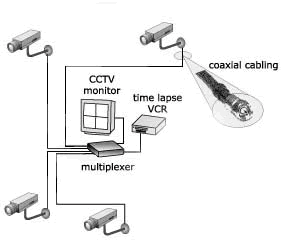 |
A monitor is also connected to the multiplexor to allow the real-time view of imagery. In early types of systems a time lapse recorder would be used to store the information from each of the cameras on to video tape. The problems associated with video tape are well known :
• the quality of the image is instantly reduced when stored on tape
• tapes further degrade over time
• tapes are very time-consuming to search
• tape management is an administration burden
• tapes are easily misplaced or stolen
• access to the system and recordings is via a secure, central area only
More recent systems employ digital video recorders or DVR's. Essentially these units have built-in hard disks or optical disks much the same as computing technology. A system console allows the user to search the images on the disk or optical device in a more efficient manner. But despite the common origin of components, DVR's are specialised equipment and, as such, command specialised prices!
Also, the base system - of cameras connected via coax cable - remains and the lack of scalability and other limitations, when compared to digital networks, are plain to see. |
Digital 'IP' Network Video (internet protocol)
In 1996 a Swedish company, Axis Communications, released the first generation of reliable, digital network cameras on to the market. The aim was to redefine the surveillance industry by harnessing the power and ever-decreasing costs of scalable computing technology and replace the requirement for new analogue installations in one fell swoop. InCam are delighted to offer the full range of Axis equipment in proposed installations and fully endorse the quality and reliability of this impressive technology.
These cameras are certainly not, what are regularly termed, 'webcams' - low cost, PC-based cameras normally marketed at the home user requiring 'web chat' applications. Network cameras are entirely independent network devices with highly advanced computing power.
The basis of the following system is a high speed computer network connecting the cameras and/or 'video servers' to a performance workstation or fileserver. Often, companies have their own existing computer network that the surveillance system can use. In some cases 'wireless' networking can be used to eliminate network cabling between cameras completely.
 |
The ability to transmit images over a computer network provides a whole host of benefits that traditional systems simply cannot match:
• high resolution images with zero loss of recorded quality
• real-time and recorded imagery available from wherever you want to see it
• secure, remote access and control of cameras
• alerts via email, SMS text
• highly flexible search and review
• sophisticated software control
• connected device control - door switches, lights, alarms
• totally remote, real-time backup to any network
• future-proof scalability
|
Quality Comparison
Many high-end analogue cameras are particularly good quality. Many cost thousands of pounds but when connected to a traditional system, the feature set is drastically reduced compared to the digital video device. The following images demonstrate Axis' market advantage with their video products - and their constant efforts to provide the very best image quality and functionality.
Digital 'progressive scan' |
Analogue - 'interlaced' format |
DVR - '2CIF' format |
|
|
|
|
|
|
|
|
|
| |
|
|
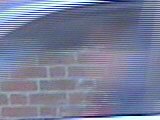
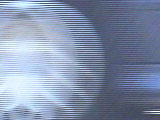
Here the vehicle is travelling at 15mph in each case. All three devices are configured to record a high number of frames per second. The interlaced-type analogue camera produces jagged-edged imagery for a moving object; the 2CIF-type DVR example simply does not have the resolution to cope with the movement and produces significant motion blur.
Conversely the benefits of Axis' digital 'Progressive Scan' technology - available throughout much of the Axis range (including the 211 series camera) - are clear; you could identify the driver. Coupling this generation of video device to a high speed network, advanced computing power and flexible software, provides a truly remarkable surveillance system often at very little extra cost premium to the analogue alternative.
For more technical information see how digital network devices work.
Integration - preserving a previous investment
There is, of course, a case for holding on to previous investment. An analogue-based system that previously cost a significant sum can be built upon where the underlying camera technology is of sufficient quality. Recent analogue cameras are particularly well featured and it is perfectly feasible to integrate these cameras into a digital system using the same method described below.
 |
In this example, 4 analogue cameras are connected to a network video server - in turn connected to the computing network. Branching off the coax cable allows the analogue feed to be retained to the multiplexor unit and subsequent monitoring and recording hardware.
In reality the multiplexor, monitor and time lapse recorder are redundant since the advantages of the digital recording medium completely usurp them in terms of efficiency and quality.
Integration of systems in this manner would require a survey of the existing equipment to verify suitability. Note that all currently available covert cameras are analogue-type and therefore require this approach when integrated into a digital surveillance network.
 |
|


 overview/.. the concept